
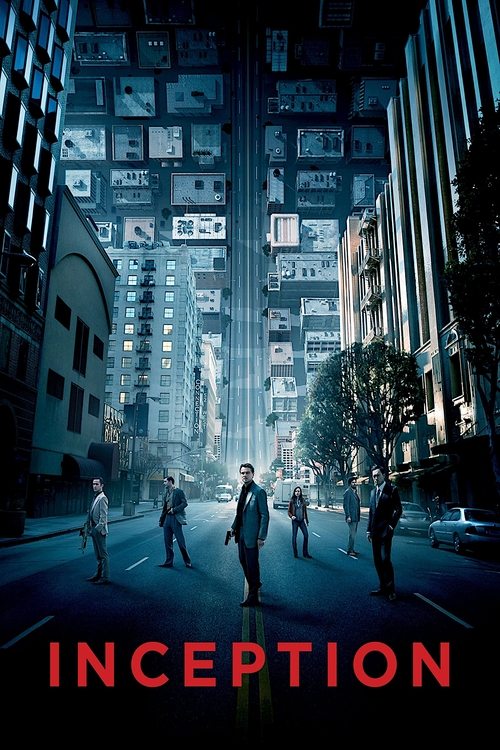
Dreams are inherently messy. Yet, Christopher Nolan decided to weaponize them into a meticulously crafted cinematic heist. Expecting a straightforward action flick? Think again. This film aggressively demands your absolute attention. It layers existential dread beneath jaw-dropping practical effects, daring you to blink while the narrative folds in on itself. The sheer audacity to pull off a concept this dense without alienating the viewer is staggering. Frankly, it remains a towering masterclass in blockbuster filmmaking that flat-out refuses to insult your intelligence.
Official Trailer
Detailed Summary
The Heist Within a Dream
Dominick "Dom" Cobb (Leonardo DiCaprio) and his business partner Arthur (Joseph Gordon-Levitt) are "extractors" who perform corporate espionage using experimental military dream-sharing technology to infiltrate their targets' subconscious. They attempt to extract information from powerful Japanese businessman Mr. Saito (Ken Watanabe) but fail when Cobb's projection of his deceased wife, Mal (Marion Cotillard), sabotages the mission. Saito reveals he orchestrated the extraction to test Cobb's skills.
Saito hires Cobb to perform "inception"—the act of implanting an idea into a person's subconscious. The target is Robert Fischer (Cillian Murphy), the son of Saito's terminally ill corporate rival, Maurice Fischer (Pete Postlethwaite). In return, Saito promises to clear Cobb's criminal status in the United States, allowing him to finally return home to his children. Cobb accepts the job despite Arthur's warnings that inception is impossible.
Descending the Subconscious
Cobb and Arthur assemble a specialized team: Eames (Tom Hardy), an identity forger; Yusuf (Dileep Rao), a chemist who concocts a powerful sedative necessary for the multi-layered dream; and Ariadne (Elliot Page), an architecture student recruited to design the intricate dreamscapes. Saito joins them to verify their success. When Maurice dies, the team shares a flight with Robert to Los Angeles. Yusuf sedates the group, and they enter Yusuf's dream, an actively raining Los Angeles. They successfully abduct Robert but are immediately attacked by his subconscious projections, who have been militarized through prior defensive training. Saito is severely wounded in the crossfire.
Cobb reveals that due to Yusuf's heavy sedative, dying in the dream will not wake them up; instead, they will fall into "Limbo," a space of infinite unconstructed dream time. The team descends into the second level, Arthur's dream, functioning as an upscale hotel. Cobb persuades Robert that his kidnapping was orchestrated by his godfather, Peter Browning (Tom Berenger), to extract Maurice's will. Cobb convinces Robert to enter Browning's subconscious to find the truth, leading them down into the third level, Eames's dream, an armed hospital fortress in the snowy mountains.
The Limbo Rescue
In the third level, the team infiltrates the snowy fortress to allow Robert to confront his projection of Maurice. However, Saito succumbs to his gunshot wounds, and Mal's projection suddenly appears and shoots Robert. Both Robert and Saito fall into Limbo. Realizing the mission is collapsing, Cobb and Ariadne enter Limbo to rescue Robert and confront Mal.
Cobb reveals he previously performed inception on Mal to convince her to wake up from their shared Limbo, which inadvertently led to her real-world suicide and his subsequent exile. Ariadne pushes Robert off a balcony to wake him up in the third level, while Cobb remains behind to locate Saito. Robert revives and experiences a cathartic moment with his dying father, successfully internalizing the implanted idea to break up his empire.
Inception Ending Explained
A series of synchronized "kicks" triggers across the nested dream levels. The team rides Yusuf's van off a bridge into the water, falls through an elevator shaft rigged with explosives in Arthur's hotel, and blows up the mountain fortress in Eames's dream. This synchronized momentum wakes everyone except Cobb and Saito back into the first level, and eventually reality. In Limbo, Cobb washes ashore and eventually locates a significantly aged Saito, reminding him of their agreement. The two men finally wake up on the airplane in the real world just as it lands in Los Angeles.
Saito honors his arrangement and makes a discreet phone call that clears Cobb at United States customs. Cobb successfully passes through the airport, reunites with his father-in-law, Professor Stephen Miles (Michael Caine), and arrives at his home. He places his totem, a small metal top used to distinguish reality from a dream, on the dining table and spins it. Before the top visibly stops or falls over, Cobb abandons it to embrace his children in the backyard. The screen abruptly cuts to black while the top is still spinning, leaving the final reality of the sequence ambiguous.
Are There Post-Credits Scenes?
No. Christopher Nolan notoriously avoids mid-credits or post-credits scenes, preferring the narrative to stand entirely on its own. The sudden cut to black over the spinning top serves as the ultimate punctuation mark, forcing the audience to debate the reality of the final scene without any extra gimmicks to ruin the mystery.
Cinematic Tone and Visual Style
Nolan trades the neon-soaked cyberpunk aesthetic typical of modern sci-fi for cold, sterile realism. The cinematography captures concrete jungles, rain-slicked streets, and snowy fortresses with clinical precision, making the dream worlds feel disturbingly grounded. The pacing operates as a relentless crescendo, functioning essentially as a ticking-clock thriller stretched across multiple distorted timelines. It holds a PG-13 rating for sequences of sci-fi action and violence, earning it not through gratuitous gore, but through heavy psychological tension, intense gunfights, and explosive vehicular mayhem.
Standout Performances
- Leonardo DiCaprio as Dom Cobb: Anchors the mind-bending spectacle with a surprisingly raw, grief-stricken performance that provides the film's emotional heartbeat.
- Marion Cotillard as Mal: Operates perfectly as a tragic femme fatale, turning profound heartbreak into a terrifying, unpredictable antagonistic force.
- Joseph Gordon-Levitt as Arthur: Delivers a pragmatic, icy cool demeanor, effortlessly carrying the film's most iconic and physically demanding zero-gravity action sequence.
The Score and Sound Design
Hans Zimmer composed the legendary score, fundamentally changing modern film music in the process. He weaponized Edith Piaf's song ("Non, je ne regrette rien"), slowing and distorting its horns to create the booming, oppressive "BRAAAM" sound that simulates the massive physical weight of collapsing dreams. The sound design is heavy and claustrophobic. During the climax, the track ("Time") plays, elevating the frantic synchronized kicks into a profoundly emotional and triumphant release rather than just a loud action set piece.
Filming Locations
The production spanned six countries, utilizing real-world locations in Japan, England, France, Morocco, Canada, and the United States. Rather than relying heavily on green screens and CGI, the production favored massive practical sets. The environment actively acts as an obstacle for the characters. The crew famously built a massive rotating hallway set inside a Bedfordshire hangar in the UK to capture the shifting gravity of the hotel fight, lending a visceral authenticity to the sequence.
Behind the Scenes Insights
- Nolan spent nearly ten years writing and refining the script, originally envisioning it as a horror film dealing with dream-stealers before pivoting entirely to the heist genre.
- Joseph Gordon-Levitt performed almost all of his own stunts in the rotating hallway, enduring weeks of intense physical training to navigate the violently shifting gravity without wires.
- The snow fortress in Calgary was built entirely from scratch on a mountain. The crew struggled with unseasonably warm weather, forcing them to use artificial snow until a massive blizzard finally hit right before shooting commenced.
Iconic Moments
Scenes That Stay With You
- The Rotating Hallway Fight: An absolute marvel of practical filmmaking. Arthur fighting projections in zero gravity while the physical world violently spins around him remains one of the greatest action sequences of the 21st century.
- The Paris Café Explosion: Cobb explains the volatile mechanics of dream-building to Ariadne as the fruit stand and café around them detonate in super slow-motion, brilliantly establishing the visual language of the subconscious.
Best Quotes
- "You mustn't be afraid to dream a little bigger, darling." – Eames
- "An idea is like a virus. Resilient. Highly contagious. And even the smallest seed of an idea can grow. It can grow to define or destroy you." – Cobb
Hidden Easter Eggs
- The first letters of the main characters' names (Dom, Robert, Eames, Arthur, Mal, Saito) appropriately spell "DREAMS". If you add Peter, Ariadne, and Yusuf to the mix, it spells "DREAMS PAY".
- The official runtime of the film is exactly 2 hours and 28 minutes, which is a subtle nod to the runtime length of the primary kick song ("Non, je ne regrette rien"), which is 2 minutes and 28 seconds long.
Final Verdict: Why You Should Watch It
If you crave intelligent, ambitious cinema that shatters your perception of reality, this is absolutely required viewing. It masterfully balances the chaotic scale of a summer blockbuster with the crushing emotional intimacy of a man desperate to forgive himself. It proves that massive studio projects can still be fiercely original and meticulously layered. You will inevitably want to hit rewind the second the screen cuts to black just to piece the puzzle together. Don't fight that urge.
